Water-based gravure ink is an environment-friendly special gravure printing ink ground with deionized water as the primary dispersion medium, matched with waterborne film-forming resin, eco pigments and functional additives. It has become the mainstream alternative to traditional solvent-based gravure ink across the flexible packaging sector and fully complies with China’s GB38507-2020 VOC limit standard for printing inks and GB4806.14 regulation for food-contact printing ink. Unlike conventional gravure ink diluted with benzene and ester organic solvents, it completes film curing via water evaporation. Thanks to ultra-low emission and superior safety performance, it has been widely adopted in food packaging, daily chemical film and paper printing industries.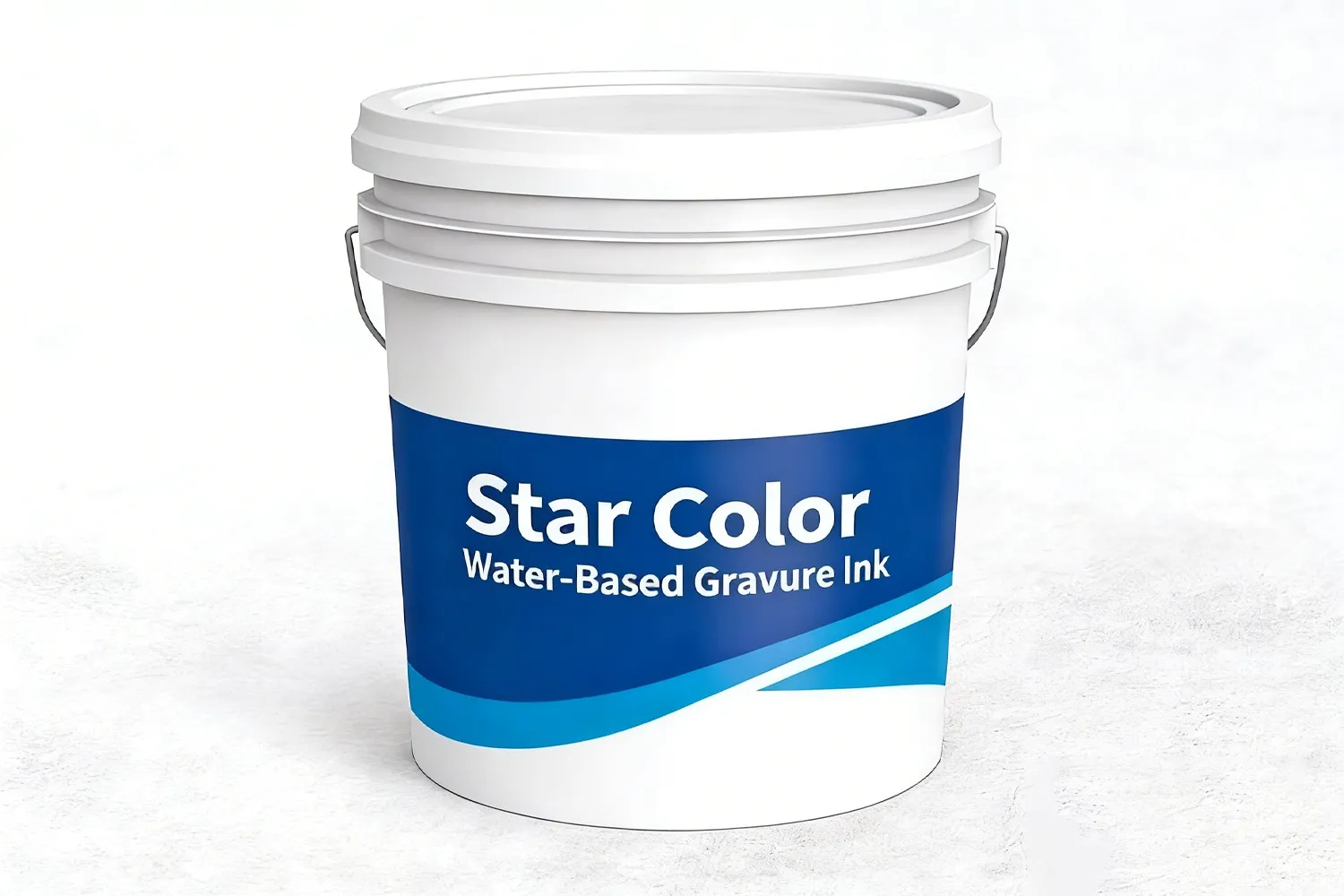
1. Basic Raw Material Composition
The formula of water-based gravure ink consists of four core components free of harmful benzene and ketone solvents:
- Waterborne binder resin: Mainly acrylic emulsion and polyurethane emulsion; it forms the skeleton of ink film and determines adhesion, water resistance and film-forming property;
- Eco-friendly pigment: Nano-sized organic and inorganic color powder with high tinting strength and qualified heavy metal content to control ink hue, hiding power and weather resistance;
- Deionized water: Primary dispersion carrier replacing traditional organic solvent, accounting for 30%~45% of total formulation;
- Functional additives: Wetting agent, defoamer, coalescent and levelling agent to improve print flow, anti-skinning property and drying speed during printing.
2. Two Main Product Categories
2.1 Surface-printing Water-based Gravure Ink
Designed for printing on substrate surface, featuring high gloss, bright color, alcohol resistance and scratch resistance. Widely applied to PE shopping bags, tissue outer packaging, beverage labels and plastic bags for garments without subsequent lamination process.
2.2 Inside-printing Lamination Water-based Gravure Ink
Printed on the inner side of films for subsequent dry or wet lamination. It boasts outstanding lamination strength, boiling resistance and oil resistance, specially formulated for snack composite pouches, high-temperature retort food bags and milk powder flexible packaging. The cured ink layer stays intact without color migration after sterilization under 120℃.
3. Six Core Advantages
- Eco-friendly & Low VOC to meet global regulations: Near-zero volatile organic compound release and eligible for FDA food-contact certification, cutting waste gas treatment cost and avoiding fines for environmental non-compliance;
- High production safety: Not classified as hazardous chemical, non-flammable and non-explosive with no strict hazardous goods limits during storage and transportation, reducing factory fire control investment;
- Lower comprehensive long-term cost: High solid content and superior hiding power cut ink consumption down to roughly 50% of solvent ink per printing area. Expenses on organic solvent purchase and hazardous waste disposal are saved to lower overall production cost by 15%~20%;
- Wide substrate adaptability: Compatible with art paper, cardboard, BOPP, PE, PET, PP, aluminum foil, biodegradable bio-film and non-woven fabric to fulfill diversified order requirements;
- Residue-free for food safety: No solvent residue after full drying, ideal for direct food-contact packaging such as infant supplies, cooked food and dairy products;
- Compatible with original gravure cylinders with low renovation cost: Existing gravure cylinders for solvent printing can be directly used after simple dilution with water, lowering technical transformation threshold for printing factories shifting from solvent to water-based ink.
4. Main Application Fields
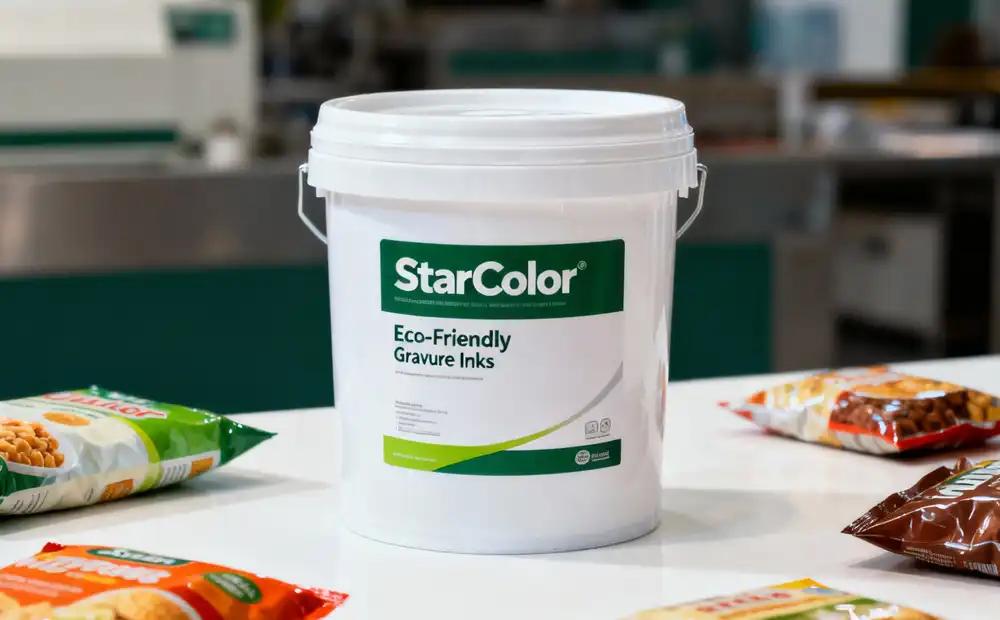
- Food flexible packaging: Bread bags, frozen food pouches, retort pouches, dairy packaging and snack stand-up pouches;
- Daily-use plastic film: PE supermarket shopping bags, fresh-keeping roll bags, cosmetic labels and wet wipe outer packaging;
- Special substrates: Biodegradable corn-starch plastic bags, non-woven handbags, pearlescent paper and PET gift films;
- Paper printing: Color boxes, trademark labels, gravure printed books and kraft paper sacks.
5. Existing Industry Shortcomings & Technical Improvement Directions
Restricted by water-based curing mechanism, conventional water-based gravure ink dries slower than solvent counterparts, requiring matched hot air drying equipment for high-speed presses above 300m/min. Special modified formula is needed to boost adhesion on non-polar substrates such as PP and PE. Leading ink manufacturers optimize formulations via hybrid resin and nano additives; newly upgraded ink achieves printing speed from 150m/min to 380m/min and gradually narrows the performance gap against solvent-based products.
6. Industry Development Prospect
Driven by domestic VOC restriction policies and global green packaging & plastic-limitation regulations, the transition from solvent ink to water-based formula has become an irreversible trend for gravure printing industry. Global annual output of water-based gravure ink keeps growing year by year, and full water-based printing has been compulsory for food export packages and European & American supermarket orders. Water-based gravure ink stays on a fast-expanding market track in the long run.