RU
RU EN
EN CN
CN


The core challenge of water-based ink printing on BOPP films lies in the mismatch between the low surface energy of non-polar BOPP substrates and the high surface tension of water-based inks. Supported by three key technologies — surface pretreatment, special ink formulation and precise process control — manufacturers can solve common issues including poor adhesion, slow drying, uneven color and set-off. This process has become a mainstream solution for environmental upgrading in the flexible packaging industry.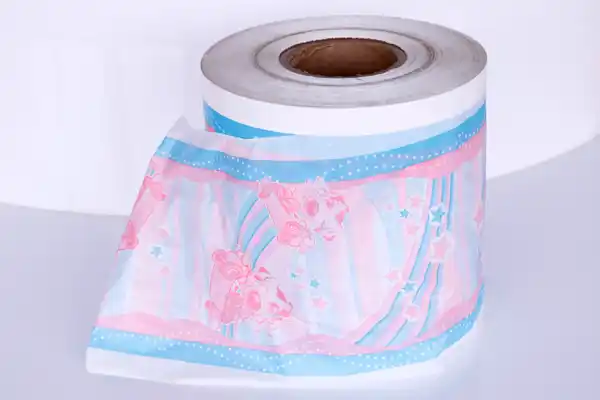
1. Technical Principles & Core Challenges
Biaxially Oriented Polypropylene (BOPP) film is a widely used substrate for flexible packaging. Its inherent physical properties conflict naturally with water-based inks. Key parameters are listed below:
| Material | Surface Tension | Material Characteristics | Printing Defects |
|---|---|---|---|
| Untreated BOPP Film | 30–32 dyn/cm | Dense molecular structure, smooth surface, non-polar, no absorption pores | Poor ink wetting and weak adhesion |
| Water-Based Ink | Around 72 dyn/cm | Water as carrier, low VOC, high latent heat of vaporization | Slow drying, easy to cause set-off and register deviation |
Three Major Technical Conflicts
- Unmatched surface energy: The surface energy of raw BOPP is lower than the minimum requirement of 38 dyn/cm for ink adhesion, resulting in poor ink anchorage.
- Imbalance between wetting and drying: Drying slows down under high humidity, while excessive heat tends to stretch and wrinkle BOPP films.
- Incompatible resin system: Conventional ink resins fail to form stable chemical bonds with BOPP surfaces.
2. BOPP Film Surface Pretreatment Technologies
The target of pretreatment is to stably raise the film surface energy to 38–42 dyn/cm, which is the critical step to guarantee ink adhesion.
| Pretreatment Method | Key Parameters | Final Surface Energy | Application Scenarios | Notes |
|---|---|---|---|---|
| Corona Treatment (Mainstream) | Power: 30–50 W·min/m² | 38–42 dyn/cm | Regular food and daily chemical flexible packaging | Complete printing within 24 hours; surface energy will gradually decay |
| Plasma Treatment (High-end) | Atmospheric pressure full-area plasma treatment | Above 45 dyn/cm | Products requiring high water resistance and strong adhesion | Higher equipment cost, suitable for high-end mass production |
| Primer Coating | Coating weight: 0.1–0.3 g/m² | 39–43 dyn/cm | Old machines and ordinary water-based inks | Extra process and cost; control coating thickness to avoid white spots |
3. Formulation & Parameters of BOPP-Specific Water-Based Ink
Customized ink is essential for superior printing quality. Strict requirements apply to resin selection, additives and physical indicators.
3.1 Formula Requirements
- Main resin: Acrylic-polyurethane hybrid emulsion for balanced adhesion and water resistance.
- Adhesion promoter: Add 1.5% silane coupling agent to enhance interfacial bonding.
- pH adjustment: Maintain overall pH value between 8.0 and 8.5.
- Wetting agent: Organosilicon surfactant to reduce ink surface tension to 35–40 dyn/cm.
3.2 Standard Physical Parameters
| Printing Type | Viscosity (Cup #4) | Pigment Fineness | Solid Content |
|---|---|---|---|
| Gravure Printing | 25–35 cps | Color ink ≤15 μm, White ink ≤20 μm | 35%–45% |
| Flexographic Printing | 18–25 cps | Color ink ≤15 μm, White ink ≤20 μm | 35%–45% |
4. Complete Production Process & Equipment Parameters
Standard workflow: Unwinding → Surface Pretreatment → Multi-color Printing → Graded Drying → Rewinding → Lamination / Slitting
4.1 Tension Control
| Working Position | Standard Tension | Allowable Fluctuation |
|---|---|---|
| Unwinding | 0.8–1.2 N | ±0.2 N |
| Printing Unit | 1.5–2.0 N | ±0.2 N |
| Rewinding | 2.0–2.5 N | ±0.2 N |
4.2 Drying System Parameters
- Temperature gradient: 45℃ → 55℃ → 65℃. Avoid instant high-temperature heating.
- Hot air speed: 25–35 m/s to accelerate water evaporation.
- Dwell time per unit: 1.5–2.0 s to ensure thorough drying.
4.3 Printing Speed & Pressure
| Printing Type | Running Speed | Printing Pressure | Anilox Roller Specification |
|---|---|---|---|
| Gravure | 60–100 m/min | 2.0–2.5 bar | Shallow cell: 15–25 μm |
| Flexo | 80–150 m/min | 2.0–2.5 bar | 300–400 lines per inch |
4.4 Workshop Environment Requirements
- Ambient temperature: 22–26℃
- Relative humidity: 45%–55%
- Static control: Install ion bars to keep static voltage below 100 V
5. Common Defects & Solutions
| Defect | Main Causes | Solutions |
|---|---|---|
| Poor adhesion, ink peeling in tape test | Insufficient surface energy, incompatible ink, incomplete drying | Increase corona power; replace with dedicated water-based ink; extend drying time |
| Slow drying and roll set-off | High humidity, insufficient airflow, excessive ink film thickness | Dehumidify workshop; raise airflow speed; slightly reduce ink viscosity |
| Uneven color and blurred dots | Worn anilox roller, unstable tension, insufficient defoaming | Replace anilox roller; calibrate tension; add appropriate defoamer |
Summary
The core principle of water-based ink printing on BOPP films relies on a three-in-one solution: substrate pretreatment, special ink formula and strict process management. Apply corona or plasma treatment together with acrylic-polyurethane hybrid ink, and precisely control tension, temperature, airflow and workshop conditions to achieve stable mass production. This eco-friendly printing technology will remain a leading choice for flexible packaging in the future.
Frequently Asked Questions (FAQ)
Q1: Is corona treatment mandatory for BOPP film printing?
A: Yes. Untreated BOPP film has surface energy of only 30–32 dyn/cm and cannot be wetted by water-based ink. The surface energy must reach above 38 dyn/cm after treatment. Printing should be completed within 24 hours to prevent surface energy attenuation.
Q2: Can regular gravure presses use BOPP-specific water-based ink directly?
A: Yes, but modifications are needed: fit shallow-cell anilox rollers, boost drying airflow, adjust ink viscosity and pH value, and protect ink delivery systems from alkaline corrosion.
Q3: How to improve water resistance of water-based ink prints on BOPP films?
A: Three practical methods: adopt plasma treatment for higher surface energy, select acrylic-polyurethane hybrid ink, and moderately increase final drying temperature to achieve full resin cross-linking.