RU
RU EN
EN CN
CN


Oil-based ink is wear-resistant, dark in color and high in gloss. Does that mean it works better? Water-based ink is eco-friendly and odor-free, requiring no worries about environmental compliance, and it also delivers decent print quality.
When it comes to paper printing, which one would you choose: oil-based ink or water-based ink? This article makes a full comparison between water-based ink and oil-based ink, concludes the optimal option for paper printing and provides professional references for you.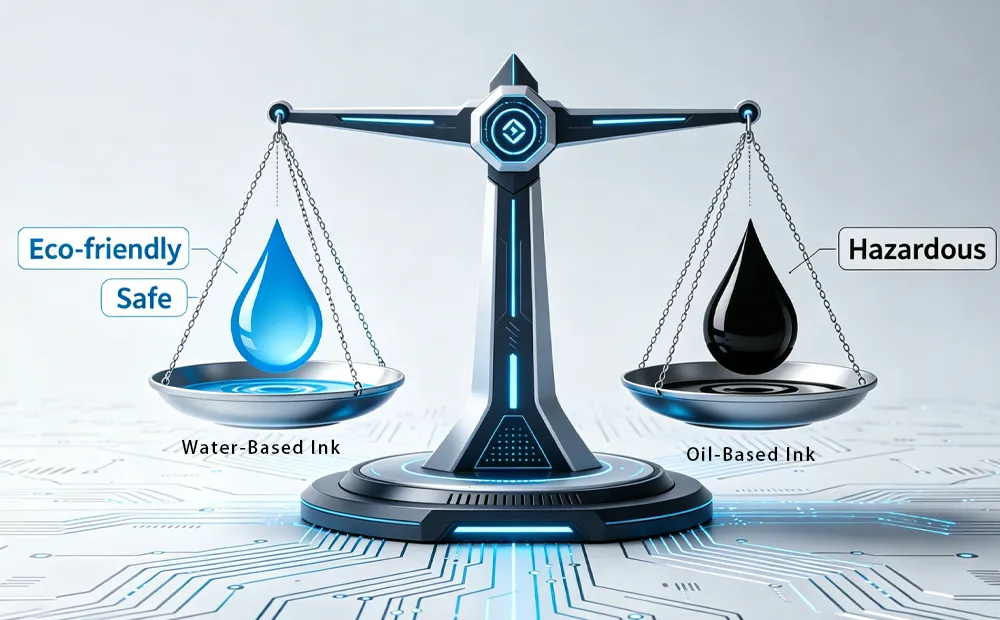
1. Core Conclusion: Water-Based Ink Is More Suitable and Mainstream for Paper Printing
To put it simply: water-based ink outperforms oil-based ink in 95% of paper printing applications.
Paper is a porous fiber material with strong water absorption and soft texture. It is not compatible with oil-based ink which contains high-content solvents and has strong penetration. As water serves as the carrier, water-based ink features mild penetration and fine film formation without strike-through, making it a tailor-made ink system for paper printing.
Oil-based ink is only applicable to a small number of industrial paper products that require high wear resistance. For civil products, packaging, books, cultural and creative products and food paper bags, water-based ink is the preferred solution.
2. Full Comparison Between Water-Based Ink and Oil-Based Ink for Paper Printing
| Comparison Item | Water-Based Ink (Recommended for Paper) | Oil-Based Ink (Traditional Ink) |
|---|---|---|
| Environmental Safety | Free of benzene and ketone compounds, low VOC, heavy metal free and odorless. Non-toxic and safe for food paper bags, children's paper products and maternal & infant packaging. | Contains a large amount of benzene and ketone organic solvents with high VOC emission and pungent odor. It leaves chemical residues and fails to meet safety standards for food and infant paper products. |
| Paper Compatibility | Mild water-based penetration enables the ink to combine and cure with plant fibers of paper. It will not corrode the paper surface, and the paper will not turn yellow, become brittle or have strike-through after long-term storage. | Organic solvents feature strong corrosion and penetration. They easily pass through paper fibers, causing dark strike-through. The paper will turn yellow and brittle, greatly shortening the service life. |
| Print Quality | Sharp dots, no burrs on fine texts, even and transparent colors, while lacking high gloss effect. | Bright colors and high gloss. However, it is easy to cause distorted dots, blurred texts and dirty print layout during printing. |
| Drying Performance | Matches the air permeability of paper. It dries thoroughly and evenly, preventing set-off, plate clogging and roll adhesion during high-speed printing. | The surface dries quickly while the inner layer remains wet. Incomplete drying easily leads to re-adhesion, oil reversion and dirty plates after rolling and stacking, resulting in high rejection rate. |
| Operation Cost | Though the unit price is slightly higher, water-based ink has lower consumption. It requires less later maintenance and produces fewer wastes, leading to lower overall production cost. | High consumption of organic solvents, expensive environmental protection operation cost, high defect rate and large waste volume, resulting in higher total production cost. |
3. Why Water-Based Ink Is More Ideal for Paper Printing
3.1 Mild penetration fits loose paper fibers
Paper is made of natural plant fibers with inherent water absorption. Water-based ink penetrates into the fiber surface with water molecules and forms firm color fixation after curing. The printed pattern will not fade, smudge or strike through the paper.
By contrast, the strong solvent of oil-based ink brings excessive penetration. It easily goes through thin paper, causing black strike-through and making the paper brittle and damaged.
3.2 Odor-free for higher product safety
Most printed paper products are in direct contact with people, such as food paper bags, packaging boxes, picture books, books, shopping bags and cultural and creative paper products.
Products printed with water-based ink have no residual odor. They comply with EPA, REACH and other international environmental standards, suitable for export and brand quality inspection.
Oil-based ink leaves long-lasting solvent odor, which is noticeable in enclosed spaces. Many brands have explicitly prohibited the use of oil-based ink.
3.3 Clean printing effect improves product grade
Oil-based ink creates dull and heavy colors and often causes blurred characters and dots, presenting a low-grade visual effect.
High-quality water-based ink delivers bright and transparent colors with clear layers, sharp fine texts and natural gradient effects. It upgrades the overall grade of paper products, perfect for brand packaging, high-end color boxes and exquisite paper bags.
3.4 Adaptable to high-speed production and improves factory efficiency
Optimized drying system makes water-based ink perform stably on kraft paper, art paper, coated paper and laminated paper under high-speed printing. It avoids roll adhesion and plate clogging to ensure continuous production without frequent shutdown.
Oil-based ink has poor drying performance. Set-off and waste products frequently occur in high-speed production, which seriously reduces production capacity.
4. Is Oil-Based Ink Still Necessary? Applicable Scenarios
Oil-based ink has not been completely phased out, and it is only applied to special industrial paper products as follows:
- Industrial paper labels requiring extreme wear resistance
- Special laminated thick paper and waterproof industrial paper products
- Low-price ordinary black-and-white printing with no environmental requirements
For brand packaging, food-contact products, supermarket goods, export orders, children's paper products and mass printing projects, water-based ink is always the top choice.
Summary
For conventional paper printing including paper bags, color boxes, cardboard, picture albums, shopping bags and food packaging, water-based ink is your best pick.
Water-based ink matches paper materials better with better print effect, higher safety, eco-friendliness, stable production performance and lower comprehensive cost. Oil-based ink is only limited to a few special industrial paper products and no longer suitable for mainstream commercial paper printing.
Frequently Asked Questions (FAQ)
Q1: Does printed paper with water-based ink fade easily?
A: No. Professional water-based ink for paper can fully combine and cure with paper fibers. It has strong adhesion and good resistance to rubbing and folding, so it will not fade or smudge in normal use.
Q2: Will water-based ink cause ink bleeding or strike-through on paper?
A: Formally formulated water-based ink features even penetration and stable film-forming performance. It will not penetrate excessively like oil-based ink. The paper surface stays clean without ink bleeding or strike-through.
Q3: Why do most printing factories switch to water-based ink nowadays?
A: Tighter environmental regulations and higher customer requirements promote the transition. Water-based ink produces odorless finished products with low defect rates. It adapts to high-speed mass production and meets export compliance standards, so it becomes the optimal solution for modern paper printing.