RU
RU EN
EN CN
CN

In the production of water-based ink printing on non-woven fabrics, a typical and often misjudged quality problem frequently occurs: the substrate has been corona treated, passes the cross-hatch test (indicating good adhesion), and shows no obvious fading after washing. However, when rubbed with A4 printing paper, the ink color clearly transfers onto the paper. Most practitioners mistakenly attribute this fading to "insufficient adhesion", but in reality, the two are fundamentally different. Based on industry practical data and substrate characteristics, this article analyzes the core causes of this phenomenon and provides practical improvement solutions.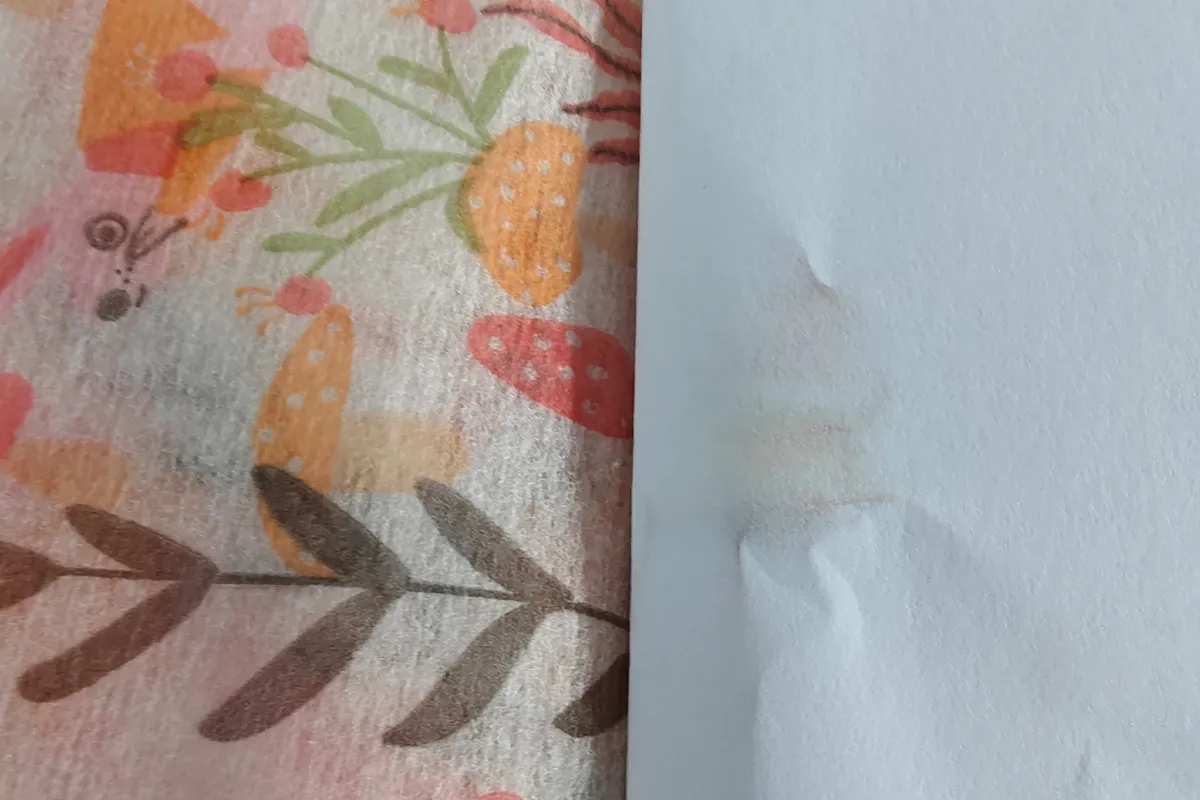
1. Key Question: Why Doesn't Fading Occur in Washing but Happens with Paper Rubbing?
First, we must clarify the essential differences between the two key properties to avoid confusion:
- Logic behind no fading in washing: Water-based inks for non-woven fabric printing must meet basic water resistance requirements (≥50 wipes without obvious fading or peeling). Their resin system provides stable water-resistant film formation. During washing, water only infiltrates the surface and cannot break the bond between resin and pigment. Minor pigment loss is invisible to the naked eye, hence the appearance of "no fading".
- Abrasion resistance and water resistance are independent: Washing tests evaluate the "overall water-resistant peeling strength of the ink film", while paper rubbing evaluates "surface abrasion resistance and pigment encapsulation fastness". These are separate performance indicators—qualified water resistance does not guarantee qualified abrasion resistance. According to industry statistics, about 60% of fading complaints fall into this category, essentially caused by insufficient surface abrasion resistance.
2. Core Principle of A4 Paper Rubbing Fading
Standard 80g A4 paper has a surface roughness (Ra) of 0.8~1.2μm, similar to fine sandpaper. Non-woven fabric has a much rougher surface at Ra 3.5~5.0μm, far exceeding smooth films like PE/BOPP (Ra 0.1~0.3μm).
During rubbing, fine cellulose fibers on A4 paper act like tiny scrapers, exerting shear force on raised ink areas. The uneven fibrous structure of non-woven fabrics causes uneven film formation: ink in recessed areas is protected by fibers, while ink on protrusions (only 1/3~1/2 the thickness of recessed areas) has thin resin encapsulation and exposed pigments, which are easily adsorbed and stripped. White A4 paper is highly sensitive to colored pigments; a transfer of just 0.01g/㎡ creates visible discoloration, amplifying the fading effect.
3. Non-woven Material Characteristics: Inherent Cause of Fading
The critical difference between non-woven fabrics and smooth films like PE/BOPP lies in their unique surface structure:
Non-woven fabrics consist of randomly interlaced fibers with numerous capillary pores (5~20μm) and an uneven surface. This structure prevents water-based inks from forming a continuous, smooth, dense film. Practical tests show that ink film density on non-woven fabrics is only 65%~75% of that on films. Raised areas suffer from insufficient resin cross-linking and high pigment exposure, creating inherent risks for rubbing fading.
Smooth PE/BOPP films allow uniform dense film formation; under the same resin hardness, their surface abrasion resistance is over 30% higher than non-woven fabrics.
4. Three Core Causes of Rubbing Fading
1. Resin System Trade-off: Flexibility vs. Abrasion Resistance
To accommodate folding and curling without cracking, non-woven inks use low-hardness resins (Shore A 35~45, vs. 55~65 for film inks). Test data shows that every 10-unit reduction in Shore A hardness decreases abrasion resistance by 40%~50%. Dark colors (red, black) with pigment content ≥35% are especially prone to fading due to difficult encapsulation.
2. Poor Pigment Dispersion & Surface Floating
Inadequate dispersion (particle size ≥5μm, vs. standard ≤2μm) leaves pigments unencapsulated and floating on the surface. These loose pigments are easily stripped by only 0.2~0.3N of friction force. Industry surveys show 30% of fading issues stem from poor dispersion.
3. Lack of Special Anti-wear Additives
General-purpose water-based inks lack anti-wear components. Professional non-woven inks include 2%~5% PE wax or PTFE additives, forming a protective layer that boosts rubbing resistance to over 100 cycles (vs. less than 30 cycles for standard inks).
5. Four Practical Improvement Solutions
1. Optimize Printing Process (Zero Additional Cost)
- Use high-line anilox rollers (400~600LPI) to control ink thickness at 8~12μm (vs. standard 15~20μm)
- Reduce speed to 80~100m/min, increase oven temperature to 75~85℃, ensure full cross-linking
2. Upgrade Ink Formulation (Low Cost)
Request suppliers to add 2%~5% PE/PTFE wax additives and optimize dispersion to ≤2μm particle size, improving abrasion resistance by over 60%.
3. Resin System Upgrade (Medium Cost)
For persistent issues, switch to modified acrylic grafted resins balancing low hardness (Shore A ~40) and high abrasion resistance.
4. Apply Protective Overprint Varnish (High Cost, Ultimate Solution)
Coat with 5~8g/㎡ water-based abrasion-resistant varnish to form a protective barrier. This adds 0.1~0.2 yuan/㎡ but completely eliminates fading, ideal for finished goods or high-end orders.
Conclusion
A4 paper rubbing fading on printed non-wovens is NOT caused by poor adhesion, but by insufficient abrasion resistance combined with the material's rough, uneven surface that exposes poorly encapsulated pigments. Corona treatment does not need enhancement. Solutions should prioritize process optimization and ink performance upgrades in order of increasing cost, effectively eliminating fading and reducing production losses.